Immersive Experiences Boutique Hotels: Brand Content
Published: 2026-06-25 · Updated: 2026-09-15 · By Javier González — STARRAY Studio
Immersive Experiences in Boutique Hotels: How to Create Brand Content that Transcends the Digital
In the era of digital saturation, boutique hotels have discovered a fundamental truth: immersive experiences boutique hotels brand content are not built exclusively on screens, but in the sensory memory of guests. When Chanel chooses a boutique hotel in Ibiza to present its new collection, it's not simply seeking a venue—it's seeking a narrative universe that amplifies its brand identity through every architectural detail, every scent in the lobby, every carefully choreographed human interaction.
Contemporary hospitality has evolved into cinematic territories where every corner tells a story, and where brand content is not a promotional add-on but the very DNA of the experience. At STARRAY, we've documented events for premium brands that understand this alchemy: the ability to transform physical spaces into multisensory narratives that then translate into digital content with an authenticity impossible to replicate in conventional studios.
Narrative Architecture: Designing Spaces that Tell Stories
The most sophisticated boutique hotels have stopped thinking in terms of "decoration" to adopt the language of cinematic art direction. Every suite, every terrace overlooking the Mediterranean, every corner of the garden is conceptualized as a potential set for brand content that breathes authenticity.
When we produce content for Dolce & Gabbana or Maybelline events in Ibiza boutique properties, we work with spaces that already possess a coherent visual identity: chromatic palettes that dialogue with Mediterranean light, textures that invite touch, architecture that frames the landscape like a natural pictorial composition. This aesthetic coherence is not accidental—it's the result of creative direction that thinks in terms of immersive experiences boutique hotels brand content from the very conception of the space.
The key lies in architectural authenticity. A boutique hotel with defined personality—whether Balearic minimalism, bohemian eclecticism, or contemporary Mediterranean luxury—provides a visual context that premium brands cannot artificially manufacture. This context becomes co-author of the content, contributing layers of meaning that enrich the brand narrative without forced elements.
Events as Performances: The Choreography of Immersive Experience
Events in boutique hotels have transcended the traditional format of corporate presentations to become multisensory performances. When Nike organizes a product launch in an Ibizan villa overlooking the sea, every element—from the timing of the sunset to the musical selection, from gastronomy to lighting—is orchestrated like a piece of stage direction.
In our events and experiences services in Ibiza, we apply cinematic direction principles to event production: we think in narrative arcs, rhythms, intensity contrasts. A successful immersive event is not a succession of random moments but a carefully structured temporal composition that emotionally guides attendees through a memorable experience.
Authentic immersion emerges when barriers between observer and experience are eliminated. Boutique hotels facilitate this dissolution of boundaries: spaces flow organically between interior and exterior, between public and private areas, between formal and intimate. This spatial fluidity allows designing events where guests are not passive audience but active participants in a narrative unfolding around them.
Hybrid Content: When the Physical Feeds the Digital
The magic of immersive experiences boutique hotels brand content lies in their capacity to generate digital content with an emotional density impossible to achieve in studio productions. Every image captured during an event in a boutique hotel carries layers of authentic context: the natural Mediterranean light, the real textures of noble materials, the genuine expressions of guests immersed in a memorable experience.
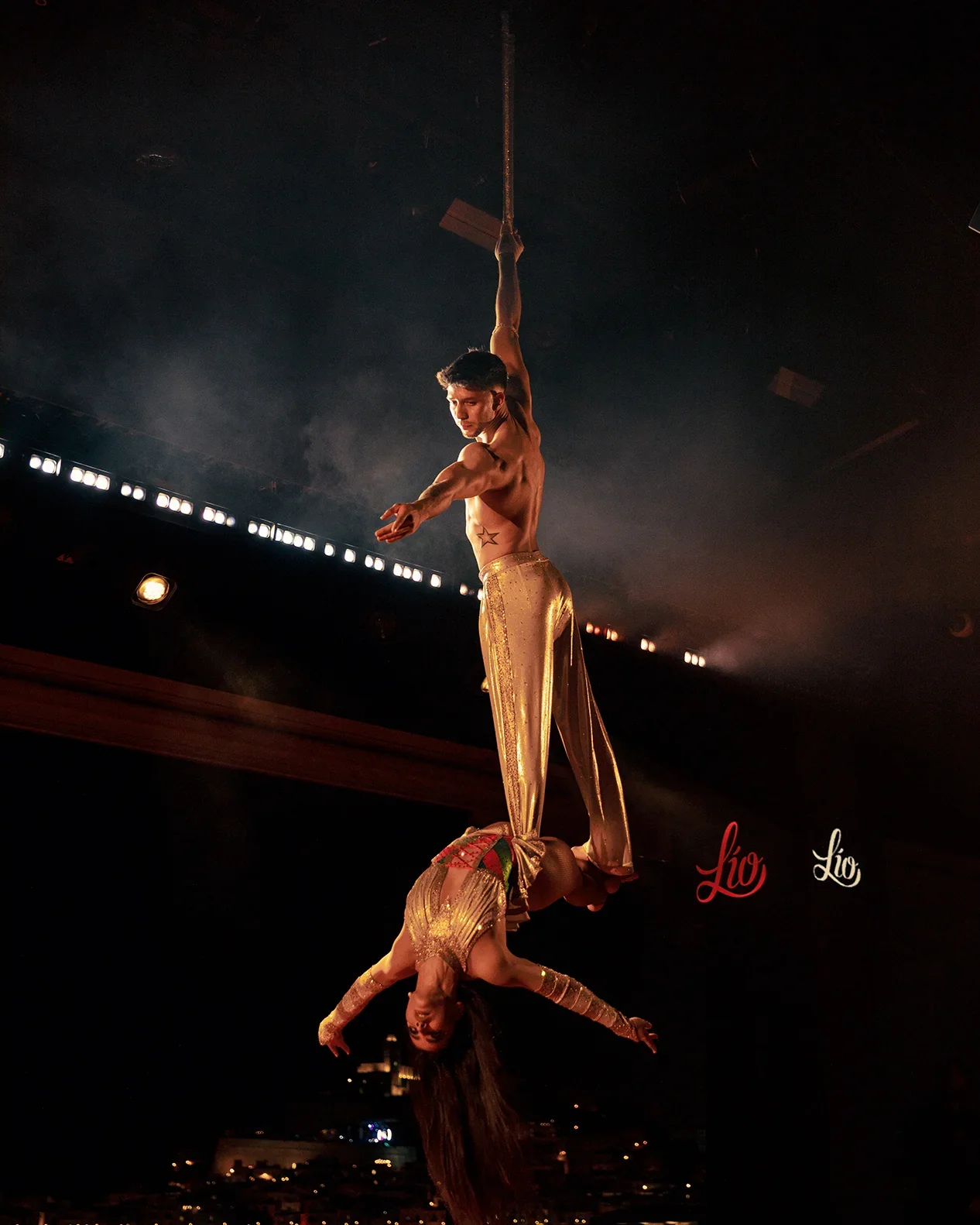
When we produce content for brands like Lio or Chanel in Ibiza boutique spaces, we capture not just images but atmospheres. The resulting content possesses an organic cinematic quality: it doesn't need excessive filters or artificial post-production because the beauty of the environment and the authenticity of human interactions already contain all the visual sophistication the brand needs to communicate.
This hybrid content strategy—where immersive physical experiences generate high-value digital assets—represents the future of premium brand content. Contemporary audiences, saturated with manufactured content, respond viscerally to images and videos that transmit real experiences. The texture of a Mediterranean afternoon, the energy of an exclusive event, the intimacy of a carefully curated boutique space—these elements cannot be digitally simulated with the same emotional power.
Invisible Technology: Integrating Innovation Without Breaking Immersion
The paradox of contemporary immersive experiences is that they require sophisticated technology to create the illusion of natural spontaneity. At STARRAY, we employ state-of-the-art capture equipment—from cinematic drones to spatial audio systems—but always with the goal that technology remains invisible to event participants.
The most advanced boutique hotels integrate technology organically: intelligent lighting systems that adapt to the time of day, ambient audio that responds to people flows, architectural projections that transform spaces without altering their physical essence. This invisible technology enables creating immersive experiences boutique hotels brand content that feel magical precisely because the technical mechanics remain hidden.
The integration of augmented reality and interactive digital elements in boutique physical spaces represents a particularly fertile frontier. Imagine an event where guests can point their devices at specific architectural elements and discover additional layers of brand narrative, or where physical art installations respond in real-time to digital interactions. This hybridization, when executed with sophistication, amplifies immersion rather than distracting from it.
Sensorial Storytelling: Beyond the Visual
Although digital content captured at boutique events is predominantly visual, the most memorable immersive experiences activate all senses. The characteristic aroma of a hotel—whether Mediterranean fig fragrance, artisanal incense, or sea breeze—becomes a brand identity element as potent as any logo.
When we produce events for premium brands, we work with sensory experience designers who think in terms of olfactory compositions, soundscapes, and tactile textures. A welcome cocktail is not just a drink but a sensory statement of intent; musical selection is not ambient filler but a sound narrative that emotionally guides the experience; space materials—linen, stone, aged wood—are chosen for their capacity to communicate brand values through touch.
This sensory richness, although it cannot be completely transmitted through digital content, permeates captured images and videos with an atmospheric quality that audiences perceive intuitively. Brand content generated in sensorially rich experiences possesses an emotional density that transcends the purely visual.
Conclusion: The Future is Hybrid and Authentic
Immersive experiences in boutique hotels represent the natural evolution of brand content in an era where authenticity has become the most valuable currency. It's not about choosing between digital and physical, but creating narrative ecosystems where both dimensions feed each other: memorable physical experiences generate authentic digital content, which in turn attracts audiences toward future physical experiences.